immie Angel spent half his life searching for a mountain of gold. He never found it. But he discovered something far more valuable: the tallest waterfall on Earth.
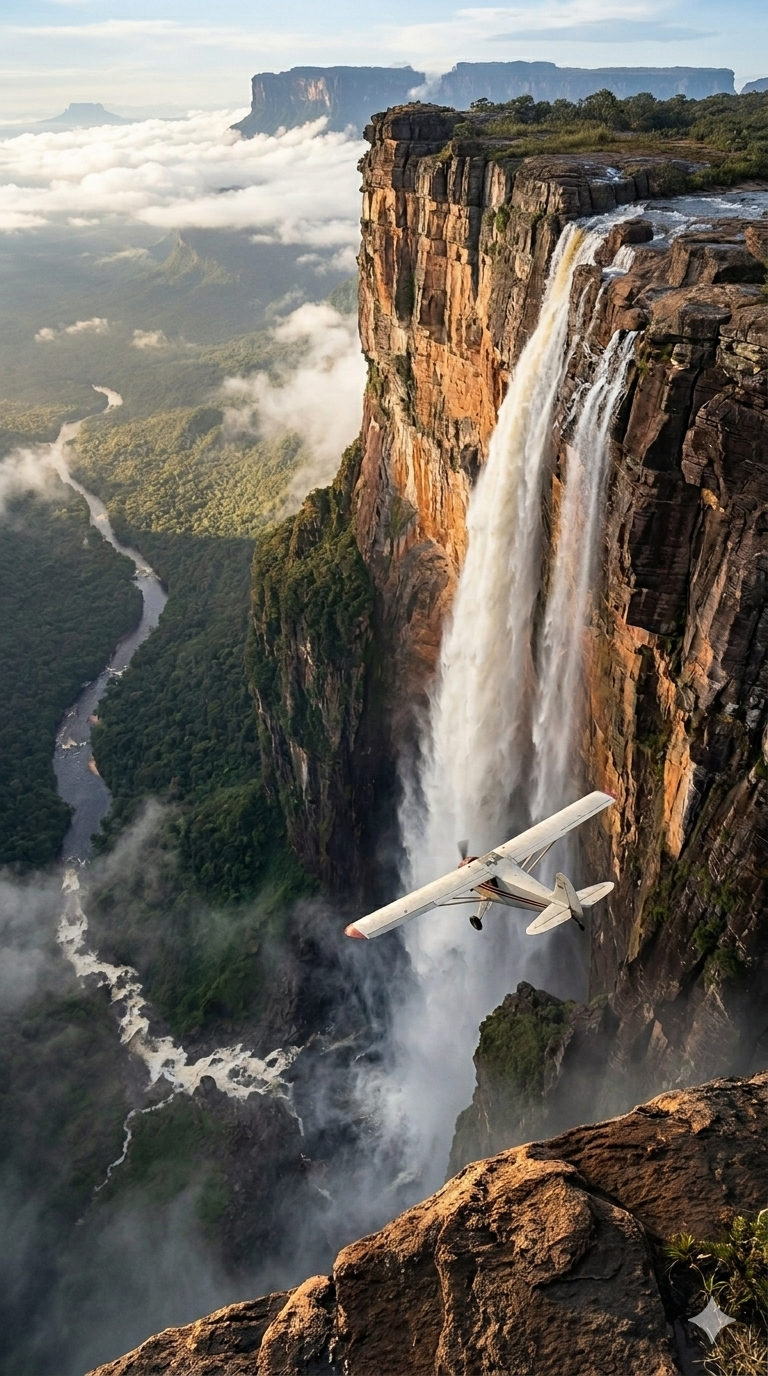
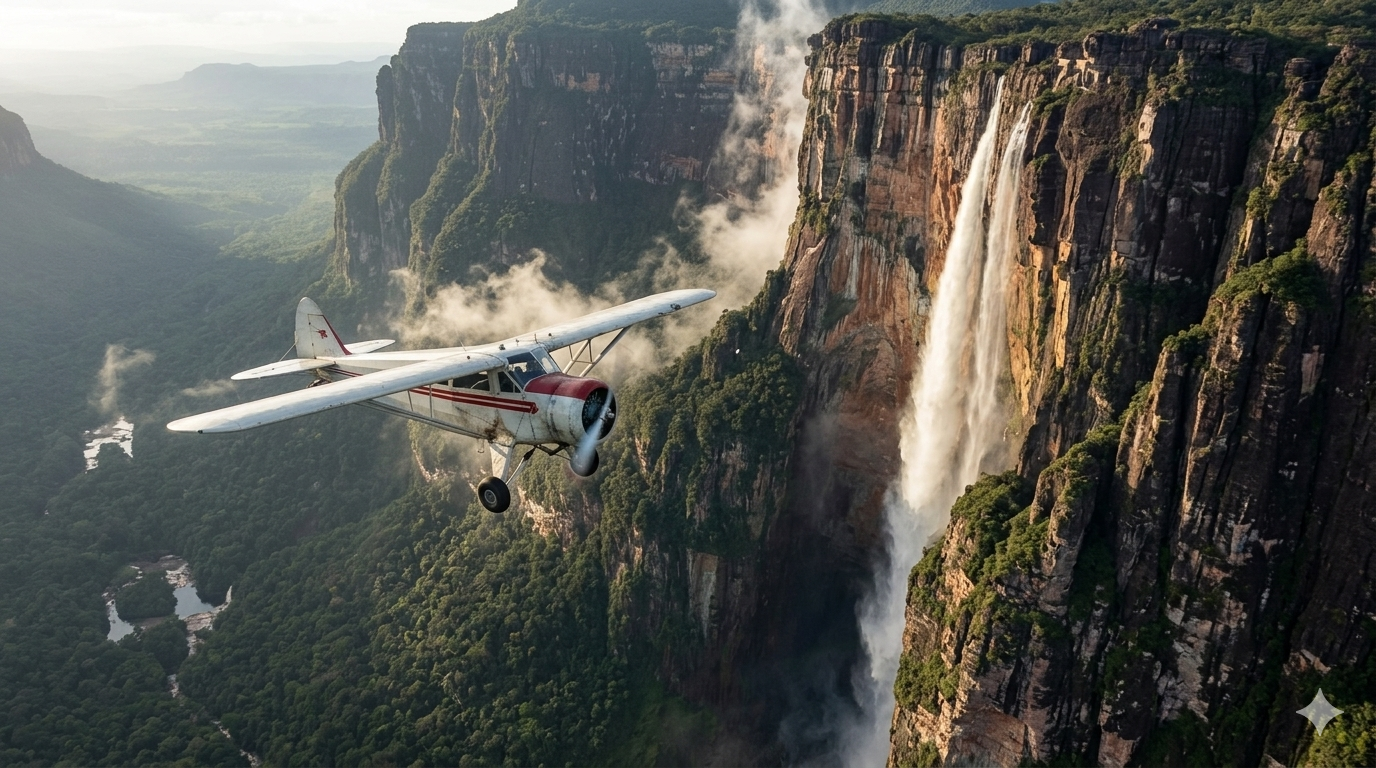
An image that became known throughout the world was that of Angel Falls, located in southern Venezuela in the Guiana Shield. In 1949, a National Geographic expedition proved it was the tallest waterfall in the world at 979 meters (3,212 feet). But little is known about the character who made it famous.
The Lost World
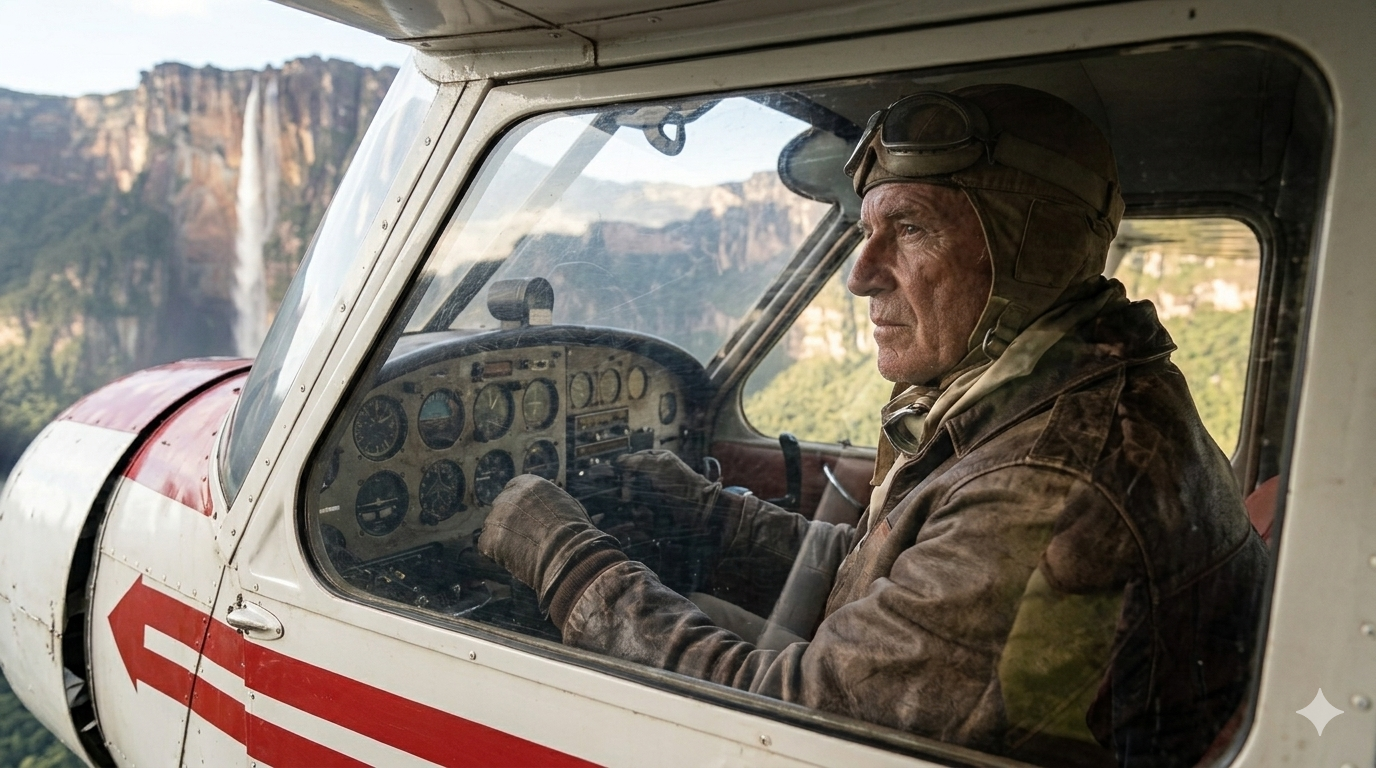
Twenty years earlier, an American aviator adventurer had flown, in a very precarious aircraft, over those unknown territories called “the lost world” following a legend that spoke of “a mountain of gold.”
Surprisingly, when he thought he had seen all the wonderful hills, cut off at the top in plate-shaped forms called tepuis, unique on Earth, one clear day he came across that monumental waterfall emanating from one of those strange mountains and falling into a large lagoon.
The Man Behind the Name
His name was Jimmie Angel, and since those years the enormous cascade over Auyantepui has been identified with his name. His story and adventures are captured in the book El Angel de Jimmie, written by a Venezuelan, also a daring aviator and adventurer, Jimmy Marull.
Marull suffered an accident in one of his acrobatic flights, very similar to the one his admired character had suffered 37 years before and which led him to death after 8 months in a coma. He decided to tell the story of his explorer colleague whom he had admired and researched for more than two decades.
"— On the pioneers of aviationThe average life of those pilots was said to be five years. One of them was James Crawford Angel Marshall.
The Pioneers of the Sky
During World War I, which ended in 1918, the first airplanes manufactured and used for war emerged with scarce technology and safety for the pilots who ventured into that transportation system for the first time.
At the end of the conflict, the era of great inventions was beginning. Just a few years earlier, the Wright brothers had registered the first sustained flight of a heavier-than-air aircraft. Almost all those pioneers of flight, without work and without resources, became the first explorers in a world that was opening up to that new possibility of transportation, opening routes, exploring with barely a compass, a watch, and a hand-drawn map on the go, marking suitable places to land and refuel.
The Last Adventure
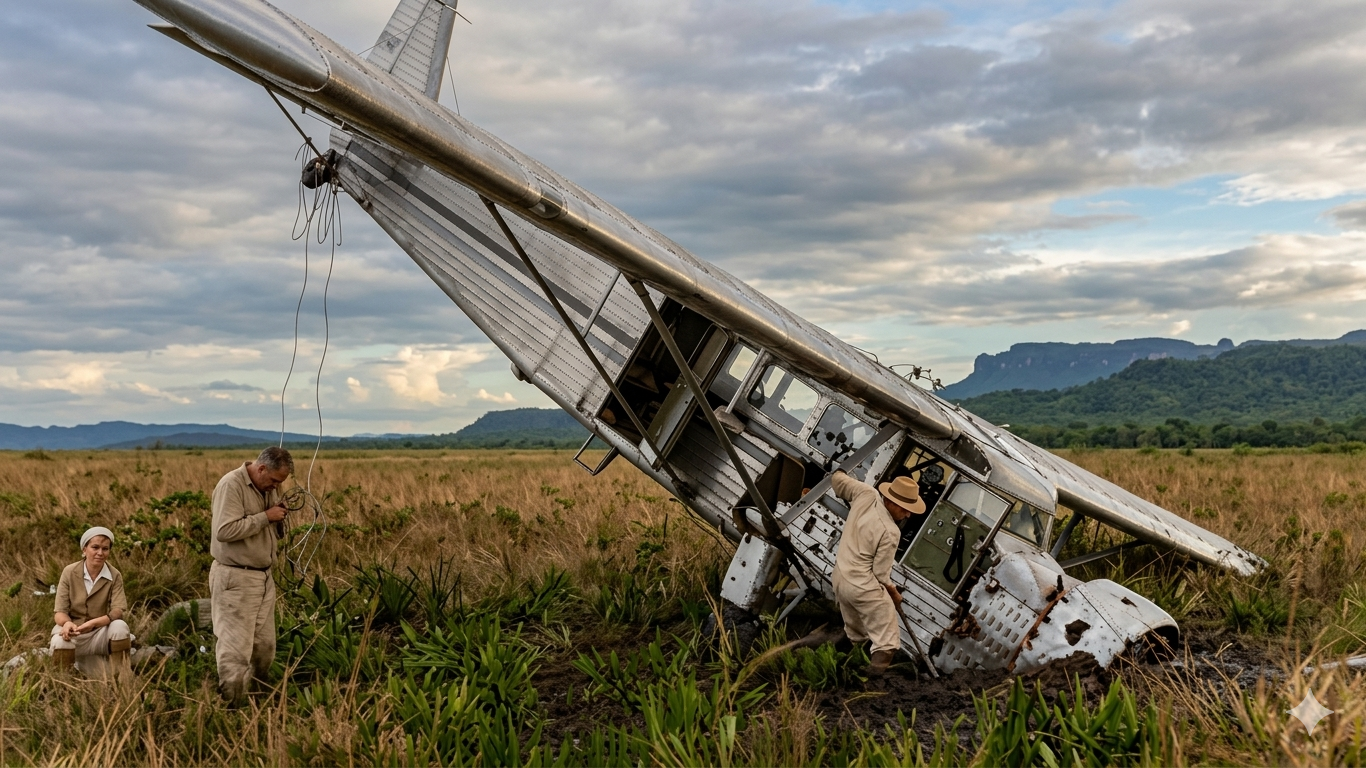
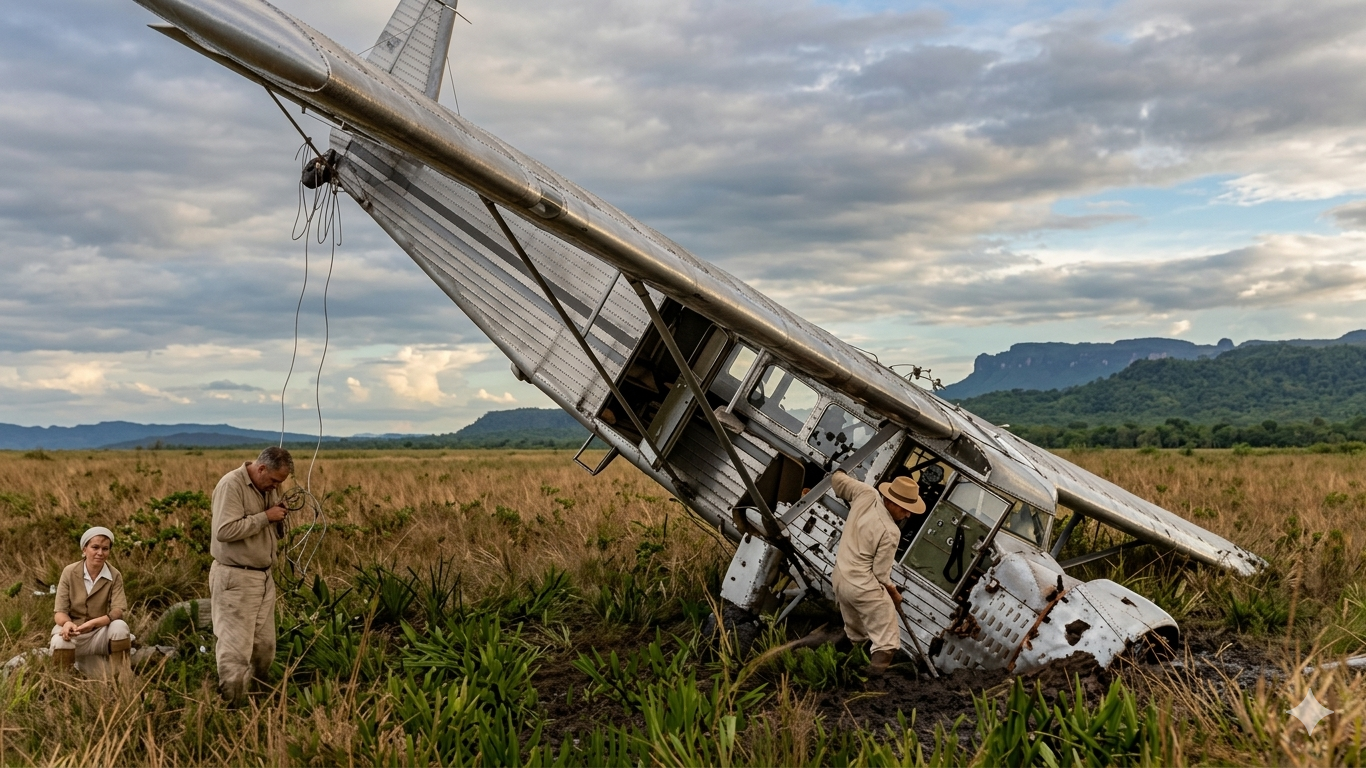
In 1937, Jimmie Angel tried to land on Auyantepui. The plane got stuck in the mud and was stranded. He and his passengers had to descend on foot through nearly impossible terrain, an eleven-day trek that almost cost them their lives.
Paradoxically, that accident —and not the discovery of the falls— was what immortalized him. The ruins of his plane still rest on the summit of the tepui as a monument to the audacity of an era.
An Unexpected Legacy
James Crawford Angel Marshall (1899–1956) was born in Missouri, United States. He spent half his life chasing a dream of wealth that never materialized. But along the way he left something more valuable than gold: a name that today identifies one of the most impressive natural wonders on the planet.
He wasn’t a scientist. He wasn’t an official explorer. He was an adventurer with a rickety plane and an unbreakable faith in the unknown. And sometimes, that’s all it takes to forever change the way the world sees a remote corner of the earth.